

22 July 2026
Song ”One Tin Soldier" describes a process of a war
I just happened to hear the song during work-out at a gym in my neighbourhood.
It was a style of telling a fairy tale.
The lyrics were very impressive to me as it says “hate your neighbours and cheat your friends in the name of God.” Then it goes on telling how the aggressor went so greedy though their opponents were generous.
The song reminds us of what is going on in the Middle East and Eastern Europe currently. The aggressors are just arrogant and never compromise with anybody.
That was true when Japan invaded China in 1930's. Japan invaded China because China refused to give in to Japan's ridiculously selfish demands. So Japan determined China was evil breaking the peace deal and provoked the war. Japan occupied most of the land causing millions of civilian casualties.
Their peace rests in bloodshed.
The song was released at the height of the Vietnam war so that war actually reflected the song. But the same process is repeated in the current ongoing wars.
We all have to listen to the song until “Peace on Earth” is realised.
16 May 2018
My Dark Tourism
Have you heard of the term "Dark Tourism"?
This is the tour to spots in which historically or even recently terrible incidents happened. It is not a travel to have fun. Rather it is for travelers to study the past and present for the better future.
I recently found I have done that many times for many years. Actually I've written about some of such trips on this blog.
But here I present photos and name of sites, year I visited.
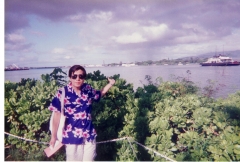
Pearl Harbour, Hawaii, the site the Japanese military attacked on US Naval Force on 7 of December 1941
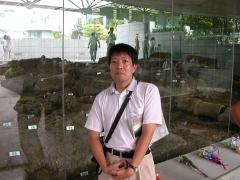
Nanjing China September 2004, the site of Rape of Nanjing in 1937, where the Japanese Imperial Army mass-murdered hundreds of thousands of Chinese including civilians.
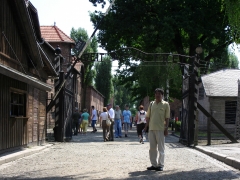
Auschwitz, Poland 2008, Holocaust Death Camp established by Nazi-Germany during the second world war
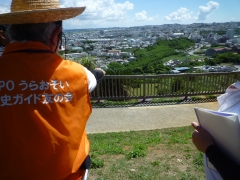
Hacksaw Ridge, in Okinawa, July 2017, A steep cliff, a big battle site between Japan and US during the second world war, where US forces climbed up to the Japanese Imperial Army Base
This incident was adapted to the 2016 film "Hacksaw Ridge." I joined a guide tour of viewing the site where the battle took place.
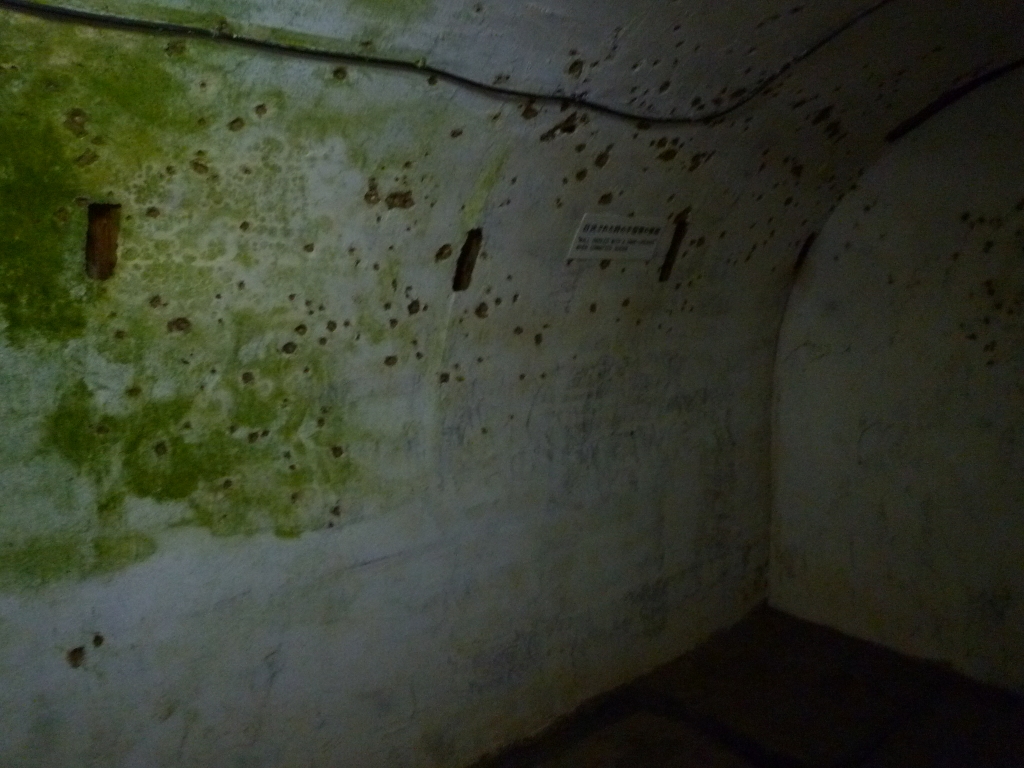
The below photos are taken at The Former Navy Underground Headquarters, which I took in September 2013.

Trace of suicidal bombing by a cheif commander inside the headquarter in the end of the battle.
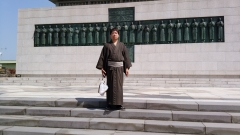
This year's March,
Execution site of 26 Christians in Nagasaki, late 16th century,
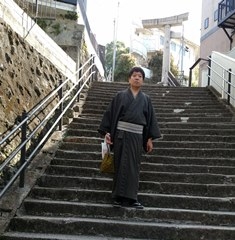
Half blown Torii Gate by the Atomic Bomb dropped on 9 of August 1945
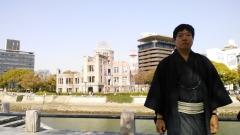
A-Bombing dome in Hiroshima, near Ground Zero of the atomic bomb dropped on 6 of August, 1945
There I met a survivor of the bomb and a German tourist and had local specialty food Okonomiyaki together at a restaurant nearby. I would like to write a mock-documentary script based on that experience.
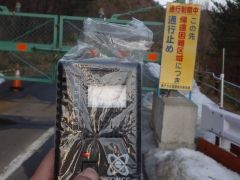
As for the recent matter, gate of Evacuation zone of Crippled Fukushima Nuclear Power Plants that was destroyed by the earthquake and Tsunami in March 2011. I visited there last year's March. Radiation Measure indicated twice higher level than normal. It is like another tour to Chernobyl.
Some claim, visiting those places should not be regarded as Tourism. But I believe this is something we all have to do. Because we are living in a world such things can happen again anytime.
Later I want to show another type of Tourism, which I call "Hot Tourism." Another Study Tour but what you see is currently happening and can join the incidents if you like.
14:16 Posted in China, Culture, Deutschland, Politics, Society, Travel, US-Japan relationship | Permalink | Comments (0) | Tags: history, nuclear power, nuclear weapon
24 August 2015
German film "John Rabe" Never been shown in Japanese theatres
I bought a DVD of it. It was released in Germany and China, 2009. Until now it was never released in Japanese theatres. Only shown at one-time meeting by peace activist meeting or symposium. DVD version was released, which individuals purchase on internet.
The drama is based on real events and people involved in Nanjing, China, capital of Republic of China, December 1937.
John Rabe, a German businessman who worked for Siemens decided to be a leader of foreign nationals' committee that managed Refugee Safety Zone in Nanjing, that was about to be occupied by Japanese imperial army.
Because he was German, it was a better choice. In those days, Japan and Germany were allies.
Together with Rabe, some American men and women were in the comittee. They were eager to save Chinese people.
After Japanese army occupied Nanjing, its soldiers did terrible things to Chinese citizens such as theft, arson, rape and even murders.
They tried to help Chinese as barricades to keep soldiers out of Safety Zone. Because they were western civilians from countries neutral from China-Japan war, Japanese soldiers could not hurt them.
Rabe took notes of the events in his diary. The film was mailny based on his diary.
What Rabe and his comittee people experienced is what is known as "Rape of Nanjing." It is estimated 100000 to 300000 people were mass-murdered by Japanese army. As the film depicts, Japanese army had a policy of no alive enemy soldiers.
In Japan, the scale of the massacre has been controversial. Mainly because it is politically sensitive. Just like other nations in the world, such historical facts are considered "masohistic."
I became very interested in this massacre since US invasion of Iraq, 2003. How Japanese army proceeded to Nanjing from the coast was pretty-much like how US army proceeded to Baghdad. What happened to the citizens there was very similar.
I went to Nanjing 11 years ago and met survivors of the massacre. Some of them witnessed Japanese soldiers killed their parents in front of them.
2 years after Rape of Nanjing, Rabe's homeland, Nazi-Germany attacked Poland and occupied surrounding nations. Mass-murdered so many innocent citizens, known as "Holocaust."
By changing position, people could be hero or evil. That is human-history. That is human-nature as well.
Good lesson for all the people of the world.
14:11 Posted in China, Deutschland, Film, Japan News, Media, Politics, Society | Permalink | Comments (0) | Tags: history, war
17 October 2010
China and Japan
The relationship between the two nations got worsened.
Both sides are afraid of the other's imperialism. China experienced invasion of Japanese army 65 years ago.
Japan learnt how Tibet has been treated by China in postwar era, which was typically described in the film, "Seven Years in Tibet."
What a mess!
One thing for sure is that we, Japanese should rethink how to deal with Chinese. It seems China cannot be good friend and market for Japan any more.
That does not mean we should rely on the U.S. again because they are more dependent on China than Japan is.
Maybe the most potential one may be South-Eastern nations. We also have to boost domestic demand.
12:17 Posted in China, Japan News, Politics | Permalink | Comments (0) | Tags: china, history